
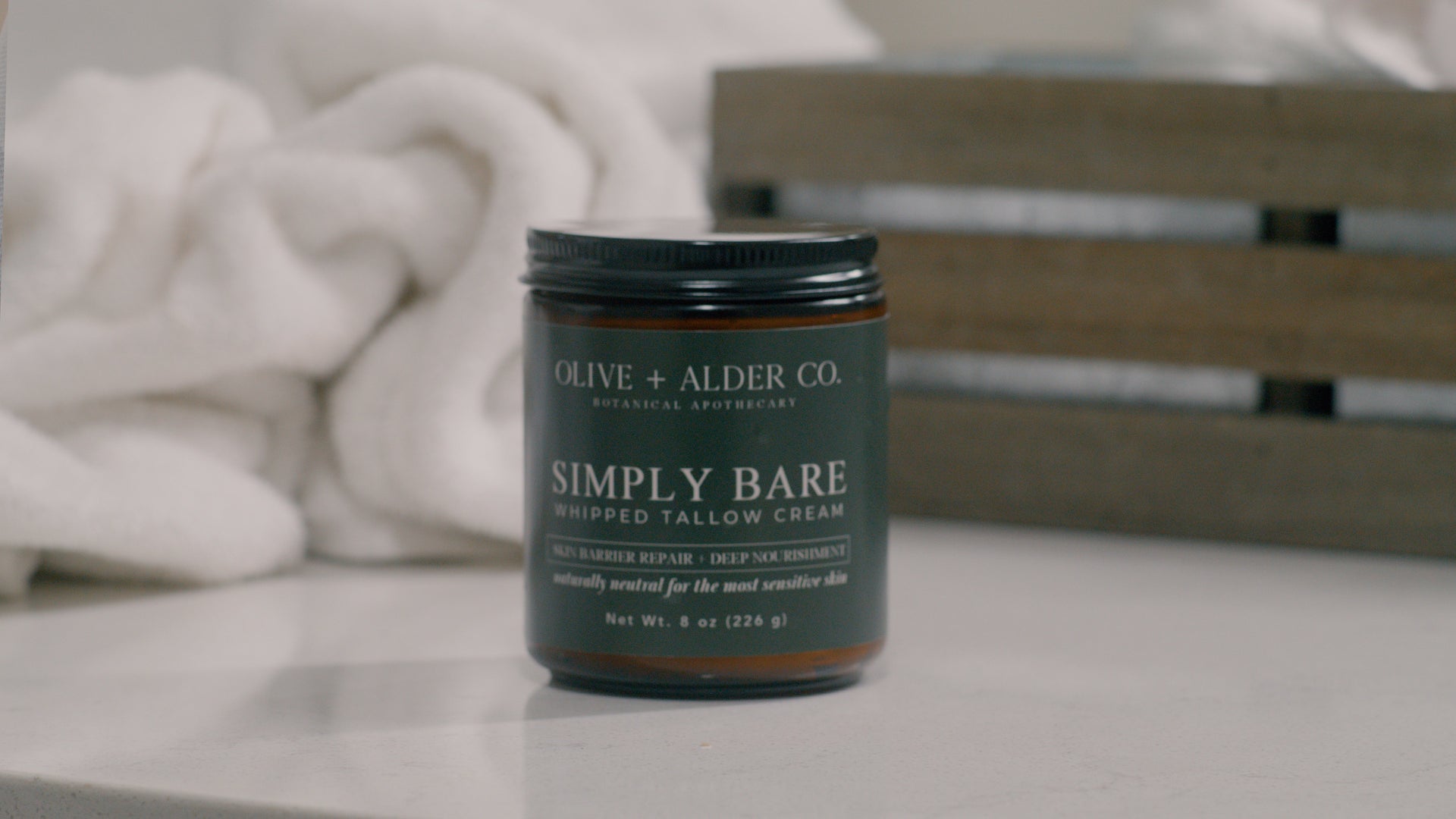
Natural moisturizers are home to some of the most nourishing, time-tested ingredients the skin has ever known.
From grass-fed tallow to cold-pressed plant oils and rich botanical butters, there is no shortage of beautiful options to choose from.
It helps to remember that not all natural ingredients work the same way, and finding the right match for your skin makes all the difference. For women navigating dryness, sensitivity or hormonal shifts, the goal is steady comfort and long-term balance.
In this guide, we will explore the most common types of natural moisturizers, how they function and what to consider when building a routine that truly supports your skin.
What a Moisturizer Is Actually Meant to Do
Before comparing ingredients, let’s take a quick step back and look at what a moisturizer is actually meant to do. At its core, a well-formulated moisturizer should:
- Reduce moisture loss,
- Support the lipid barrier,
- Improve softness and elasticity,
- And protect against environmental stress.
Healthy skin depends on a balanced barrier made up of lipids, cholesterol and fatty acids. When that barrier is intact, the skin feels calm, supple and resilient. When it’s disrupted, dryness, flaking, tightness and sensitivity often follow.
Many products promise hydration, but true moisturization goes beyond surface softness. It involves reinforcing the skin’s natural protective structure so it can retain moisture on its own.
Overall, the best natural moisturizer is the one that strengthens this foundation rather than temporarily masking imbalance or competing with the skin’s design.
Grass-Fed Tallow
Grass-fed tallow skincare has slowly made its way back into modern routines, and that return has not happened by chance.
To put it simply, tallow is rendered fat traditionally sourced from cattle. When those animals are grass-fed and pasture-raised, the nutrient profile of the fat is notably rich and stable.
Why Tallow Works
What makes tallow stand out is its similarity to human sebum. The fatty acids in properly prepared tallow closely resemble the oils our own skin produces. That compatibility allows it to absorb in a way that feels supportive rather than heavy. Properly rendered tallow contains:
- Fat soluble vitamins A, D, E and K.
- Stable saturated and monounsaturated fatty acids.
- Lipids that reinforce barrier integrity.
Because it is oil-based rather than water-based, it does not evaporate after application. It creates lasting comfort and protection.
Who Benefits Most
- Tallow is especially helpful for:
- Dry or depleted skin,
- Skin exposed to cold or wind,
- Sensitive or reactive skin,
- Supporting skin barrier repair naturally.
A thoughtfully prepared tallow balm for sensitive skin typically contains minimal ingredients and avoids synthetic fragrance, making it a steady option for compromised skin.
Plant Oils
Plant oils are widely used in natural skincare and can vary significantly in composition and effect. Common plant oils include:
- Calendula oil,
- Jojoba oil,
- Rosehip oil,
- Sweet almond oil,
- Olive oil,
- Argan oil.
- Why Plant Oils Work
Many plant oils contain essential fatty acids and antioxidants that nourish the skin. Some are lightweight and fast absorbing, making them appealing for daily use. Others are richer and more protective.
For example, Jojoba oil is particularly interesting because it closely resembles human sebum, which often makes it well-tolerated. Rosehip oil is valued for its vitamin A content. Olive oil has long been used traditionally for its emollient properties.
What to Consider
Not all plant oils are equally stable.
Oils high in polyunsaturated fats can oxidize more easily, especially when exposed to air, light or heat. Oxidized oils may irritate sensitive skin.
Additionally, some plant oil blends include essential oils for scent. Even when plant-derived, concentrated aromatic compounds can overstimulate reactive skin.
When choosing plant oil-based moisturizers, look for:
- High-quality sourcing,
- Cold-pressed oils,
- Minimal ingredient lists,
- Fragrance-free, non-toxic body care.
- Simplicity often supports stability.
Butters and Balms
Shea butter and cocoa butter are very common ingredients in natural moisturizers. These thicker ingredients function primarily as occlusives, meaning they help seal moisture into the skin.
Benefits
- Strong barrier protection,
- Reduced transepidermal water loss,
- Ideal for very dry or cracked areas.
- Considerations
Some butters can feel heavy depending on the skin type and climate. On facial skin, they may feel too occlusive for some individuals. Texture and formulation matter greatly here.
Balms that combine butters with lighter oils or tallow often create a more balanced experience.
Water-Based Natural Creams
Water-based creams are some of the most common natural moisturizers you’ll find today. Many of them are emulsions, which simply means they blend oil and water together into a smooth, stable cream.
Why They Are Popular
- Lightweight feel,
- Immediate hydration,
- Elegant texture,
- Quick absorption.
Water provides an instant plumping sensation. However, water alone evaporates quickly unless sealed in by lipids.
What to Look For
For starters, water-based formulas require emulsifiers and preservatives to remain stable. While these ingredients are necessary and often safe, they increase formula complexity.
For highly sensitive skin, fewer ingredients can reduce potential triggers.
If your barrier is compromised, relying only on water-based hydration without reinforcing lipids may leave the skin feeling tight again within hours.
What to Approach With Caution
Natural skincare can be beautiful and effective, but it still calls for a little discernment. Pay attention to:
Added Fragrance
Even essential oils can irritate fragile skin. Fragrance is one of the most common contributors to sensitivity.
Highly Refined Seed Oils
Some heavily processed oils may lack nutrient integrity and oxidize quickly.
Long Ingredient Lists
The more variables in a formula, the harder it is to identify what is working and what is not. When in doubt, simpler formulations are often easier for reactive skin to tolerate.
Matching the Moisturizer to Your Skin
Instead of asking which natural moisturizer is best, ask which one is most compatible with your current skin condition. Consider if your skin feels:
- Dry and tight,
- Exposed to cold air,
- Over exfoliated,
- Sensitive to fragrance.
- A lipid-rich option like grass-fed tallow skincare may provide the reinforcement your barrier needs.
If your skin is balanced and prefers lightweight textures, a simple plant oil blend or water-based natural cream may be enough.
The goal is not to follow the next trend. It’s to support your skin’s structure.
Why Small Batch Formulation Matters
Within small batch apothecary skincare, ingredients are chosen with intention rather than marketing appeal.
At Olive + Alder Co. formulations are created in small quantities to preserve ingredient integrity and freshness. Stable fats, minimal additives and fragrance-free bases are prioritized to support barrier health and long-term comfort.
Whether formulating a tallow balm for sensitive skin or a mineral-rich preparation, the emphasis remains on compatibility and restraint.
This approach reduces unnecessary fillers and avoids overstimulation.
Choosing What Truly Supports Your Skin
Natural moisturizers are not interchangeable, even if they share similar labels.
Tallow delivers deep lipid nourishment and barrier compatibility. Plant oils provide antioxidant support and lighter hydration. Butters help seal in moisture, while water-based creams offer a breathable layer of comfort. Each serves a purpose, but they don’t function in the same way.
When you understand these differences, choosing becomes more intentional. Prioritizing quality and compatibility allows your routine to feel steadier and more supportive over time.
If you would like guidance tailored to your skin, explore the thoughtfully formulated preparations at Olive + Alder Co. or reach out to our team. We are always happy to help women choose what feels most supportive and aligned for their skin.


